


Vietnam’s telecommunications infrastructure in 2030: Breakthroughs in coverage and technology.
In the context of globalization and digital transformation, Vietnam’s telecommunications infrastructure is constantly developing to meet the ever-increasing demands of society. According to the Information and Communication Infrastructure Development Plan for the period 2021-2030, with a vision to 2050, by 2030, telecommunications infrastructure will reach many important milestones, becoming a solid foundation for the development of the digital economy and digital society.
- 18-05-2026
- 09:25
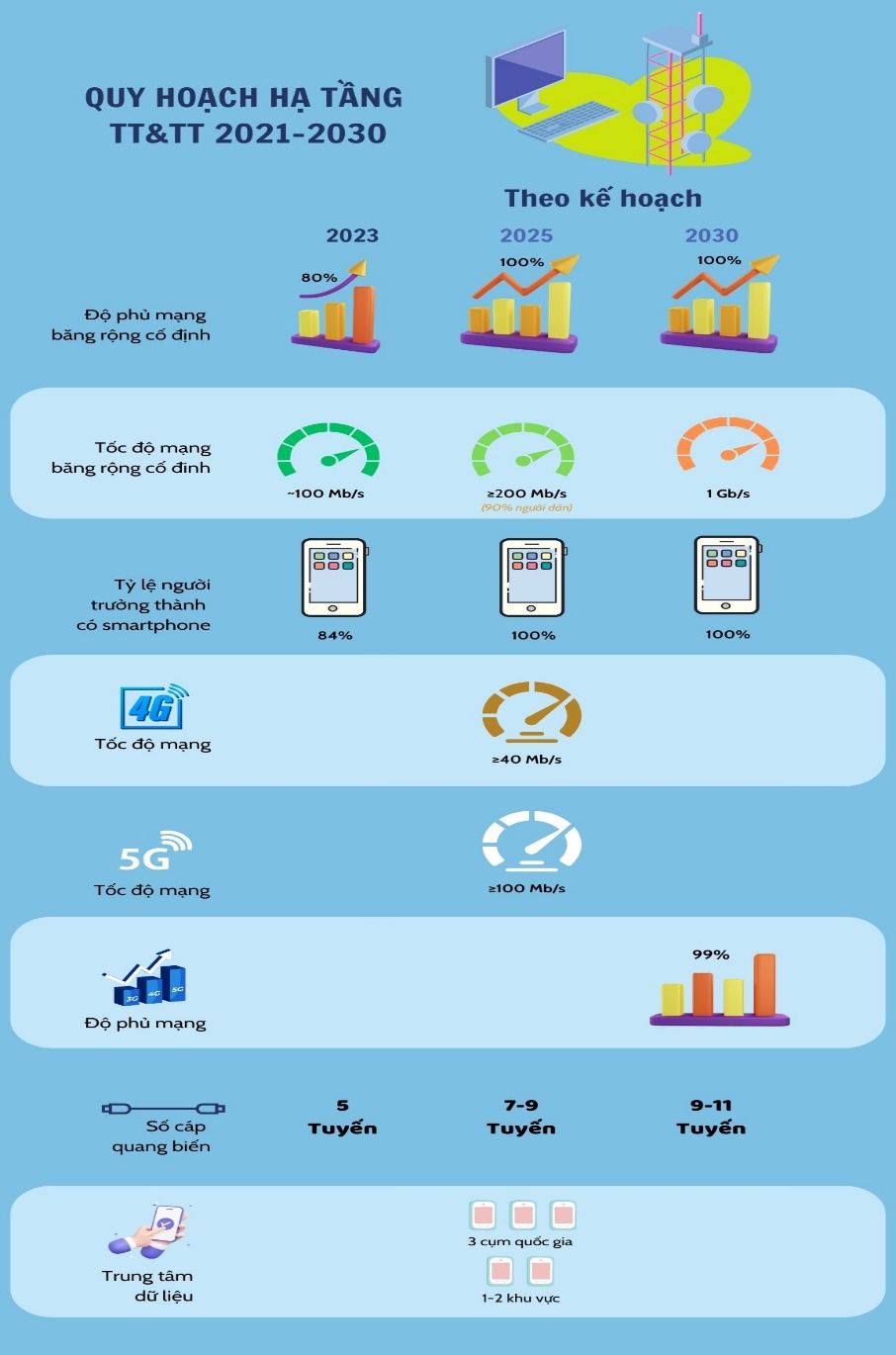
Master Plan for Information and Communications Infrastructure for the 2021-2030 Period
Fixed Broadband Coverage Reaching 100%
One of the key highlights is the target to achieve 100% fixed broadband network coverage nationwide. This means that all citizens, including those in remote areas, border regions, and islands, will have access to high-speed Internet.
Expanding broadband coverage not only improves the quality of life but also drives local economic development, enabling small and medium-sized enterprises to participate in the digital economy. In particular, this serves as an essential foundation for building smart cities, implementing digital education and digital health, and facilitating citizens' access to online public services.
To realize this goal, telecommunications enterprises will need to make substantial investments in fiber-optic infrastructure and advanced broadband technologies, such as 5G and, in the future, 6G networks. At the same time, supportive government policies—such as tax incentives and encouragement for investment in new technologies—will create favorable conditions for deployment.
Telecommunications Network Coverage Reaching 99%
Parallel to fixed broadband, overall telecommunications network coverage is targeted to reach 99% nationwide. This represents a major milestone, ensuring that citizens can stay connected wherever they are.
Telecommunications networks serve not only communication needs but also form the platform for deploying IoT (Internet of Things) applications, such as smart agriculture, traffic management, and public security. With nearly universal network coverage, Vietnam will move closer to becoming a smart and modern nation.
Notably, major network operators such as Viettel, VNPT, and Mobifone are in a race to expand coverage, especially in hard-to-reach areas. Deploying new technologies, such as satellite communications and mini mobile base stations, will provide effective solutions for remote regions.
100% of the Population Using Smartphones
By 2030, the smartphone adoption rate in Vietnam is projected to reach 100%. This is not merely a symbolic figure; it reflects a profound shift in technological habits and user demands among the public.
The widespread use of smartphones allows people to easily access online services—ranging from electronic payments and online shopping to remote learning and working applications. Furthermore, smartphones serve as a critical tool for accessing online public services, participating in distance education, and receiving timely news updates.
To achieve this target, supportive policies such as device subsidies, boosting domestic production of affordable smartphones, and enhancing digital literacy regarding smartphone use will be vigorously implemented. Additionally, social programs such as "Smartphones for Every Household" will play a key role in helping citizens, particularly vulnerable groups, access technology more easily.
Impetus from the National Digital Transformation
The building of modern telecommunications infrastructure takes place within the context of Vietnam accelerating its National Digital Transformation Program. Completing this infrastructure will construct an "information highway," propelling sectors such as e-commerce, artificial intelligence (AI), and cloud computing.
In addition, modern telecommunications infrastructure serves as the bedrock for implementing information security solutions, guaranteeing cybersecurity in the digital age. Telecommunications enterprises will need to invest not only in infrastructure development but also in security systems to safeguard user privacy and safety.
Challenges and Solutions
Despite immense potential, attaining these targets is not without hurdles. Remote areas with challenging terrain remain a complex puzzle for infrastructure deployment. Furthermore, the massive capital investment required presents significant pressure on telecommunications providers.
To overcome these challenges, close coordination among the government, enterprises, and the community is vital. Financial support policies, streamlined investment procedures, and incentives for foreign investor participation will be pivotal factors.
Vision to 2050
Looking ahead to 2050, Vietnam's telecommunications infrastructure will focus not only on coverage coverage but also on quality, with the objective of deploying 6G networks and even more advanced telecommunications technologies. This will place Vietnam on the global telecommunications map while raising its regional and international standing.
Modern telecommunications infrastructure is not just a tool; it is the key to unlocking a sustainable and prosperous future for Vietnam. The strides taken during the 2021-2030 period will serve as a solid foundation toward achieving this goal.